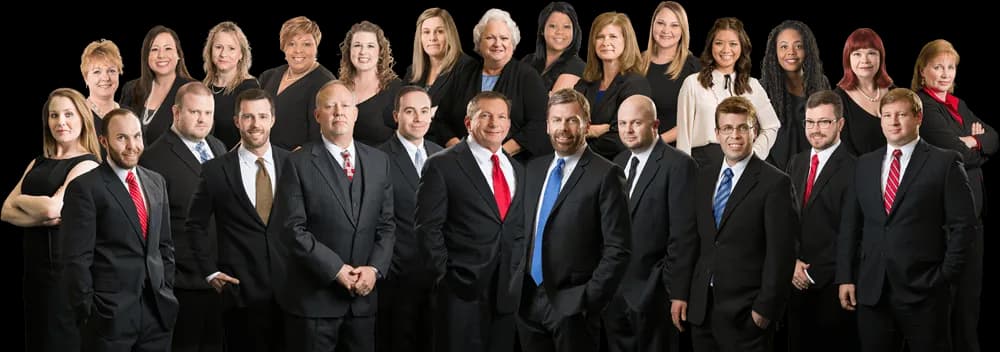
30 Years Serving Clients
Brock & Stout was founded in 1996. For three decades, our firm has helped people and families through difficult legal and financial circumstances.
Supplemental Security Income for people with limited income and resources.
A serious medical condition can make it difficult to work even if you do not have enough work credits for SSDI. SSI may provide monthly benefits if you meet Social Security's medical and financial requirements. Brock & Stout represents disability claimants nationwide through applications, denials, appeals and hearings.
Nationwide representation · 30 years serving clients · 12,000+ disability claims approved
Supplemental Security Income, usually called SSI, is a federal program administered by the Social Security Administration for people with limited income and resources who meet certain other eligibility rules.
SSI is different from Social Security Disability Insurance (SSDI) because you do not need your own history of Social Security work credits to qualify. Depending on the circumstances, SSI may be available to a person who has a qualifying disability, is blind, or is age 65 or older.
For someone applying based on disability, both the medical rules and the financial rules matter. Citizenship or qualified-noncitizen status, residency, and other nonmedical requirements can also affect eligibility. SSA explains those rules on its SSI eligibility (opens in a new tab) page.
If you are applying for SSI because a medical condition keeps you from working, Brock & Stout can help you understand both sides of the claim and represent you through the disability process. For a broader look at our practice, visit our Social Security Disability attorneys page. We can represent SSI disability claimants throughout the United States; see how nationwide disability representation works.
Free consultation · No attorney fees or case costs if the claim is denied
An SSI disability claim asks two sets of questions: whether you meet Social Security's medical rules, and whether you meet the program's financial and other nonmedical requirements. You should have a team that can explain both and present the disability evidence clearly.
30
Years Serving Clients
12,000+
Disability Claims Approved
20
Attorneys
Nationwide
Disability Representation
Firmwide figures. Not every attorney practices Social Security Disability. The approval total is a historical firm metric, not a promise about any future claim.
Brock & Stout was founded in 1996. For three decades, our firm has helped people and families through difficult legal and financial circumstances.
Our firm has helped more than 12,000 disability claims reach approval. Every case is different, and past results cannot guarantee a future outcome, but that experience gives our team extensive familiarity with the disability process.
Brock & Stout has 20 attorneys and 100 support staff across the firm. Disability clients benefit from the resources of an established law firm while still having a team responsible for helping move their individual claim forward.
Social Security Disability is a federal program, so our disability attorneys can represent claimants throughout the United States. You do not need to live near one of our offices to work with us. Much of the process can be handled by phone, video and secure document exchange.
It costs nothing to talk with us about a potential SSI disability claim.
SSI has two sides to eligibility: the category you qualify under and the program’s financial and other nonmedical rules. A person physically present in the United States is not automatically eligible. SSA also looks at income, countable resources, and citizenship or qualified-noncitizen status.
An adult under age 65 may qualify based on disability if a medically determinable physical or mental condition meets Social Security’s disability standard and the person also meets SSI’s financial and other eligibility requirements.
SSI has specific rules for statutory blindness. A person who meets SSA’s blindness standard may be eligible if the program’s financial and other requirements are also satisfied. Visual impairments that do not meet the blindness definition may still be evaluated as disability.
A person age 65 or older does not have to establish disability to qualify for SSI, but the income, resource and other nonmedical requirements still apply. Our representation focuses on disability claims. If age is the only category, SSA still decides the financial rules.
Unlike SSDI, SSI is a needs-based program. Social Security considers both income and certain resources when deciding whether someone qualifies and how much SSI may be payable. Those calculations can depend on household composition, living arrangements, and what SSA counts. A single monthly number on a website is not enough to decide eligibility.
SSA can consider wages as well as other forms of income. Not every dollar someone receives necessarily counts the same way. SSI has exclusions and special rules that can affect the calculation, including differences between earned and unearned income, couples, parental deeming for children, and living arrangements.
Do not assume you are ineligible based solely on one income figure. SSA decides what counts and how it is counted.
Current federal countable-resource limits are $2,000 for an individual and $3,000 for a couple. SSA publishes those limits on its SSI resources (opens in a new tab) page.
Not everything a person owns counts as an SSI resource. For example, SSA generally excludes the home you live in and, under current rules, one vehicle used for transportation, along with certain other property. SSA decides what is countable.
For an adult applying for SSI based on disability, Social Security generally uses the same medical disability standard it uses for SSDI.
A diagnosis by itself is not enough. SSA looks at whether a medically determinable physical or mental condition prevents substantial gainful work and has lasted, or is expected to last, at least 12 continuous months or result in death.
SSA may also consider whether you can perform relevant work you have done in the past or adjust to other work. Current past-relevant-work rules generally look at qualifying work from the last five years.
The difference between SSI and SSDI is not generally the adult medical disability standard. The major difference is in the nonmedical eligibility rules. SSDI is tied to work credits. SSI is needs-based and has income and resource limits.
| Topic | SSI | SSDI |
|---|---|---|
| Based on your own work credits? | No | Generally yes |
| Income and resource limits? | Yes. SSI is a needs-based program. | SSDI is not a needs-based program, although work activity can affect disability eligibility. |
| Adult medical disability standard | Generally the same SSA disability standard | Generally the same SSA disability standard |
| Benefit amount | Depends on federal and state SSI rules, countable income and living circumstances | Generally based on the worker’s covered earnings record |
| Health coverage | Often connected with Medicaid under applicable state rules | Medicare under applicable entitlement rules |
Some people may qualify for both SSI and SSDI at the same time. This is sometimes called concurrent benefits. Medicaid connected with SSI is not automatic in every state; see SSA’s SSI and Medicaid (opens in a new tab) discussion. For a closer look at the nonmedical questions that often come up, use our SSDI vs SSI guide.
You do not have to wait for a denial to ask for help. We work with people at different stages of an SSI disability claim.
You may understand that SSI is needs-based but be unsure how your medical condition, income, resources or living situation fit the rules. We can help you identify the issues that may affect the claim.
Talk About SSI Eligibility — request a free disability case evaluation
We can help you understand what information Social Security will need and how the medical-disability evaluation works.
Talk About an SSI Application — request a free disability case evaluation
A denial is not necessarily the end of the claim. We can review the decision, explain the next stage and help with the appeal when appropriate.
My SSI Claim Was Denied — request a free disability case evaluation
We can prepare you for the hearing, review the evidence and represent you before the administrative law judge.
Help With an SSI Hearing — request a free disability case evaluation
You do not need an attorney to file an SSI application. Social Security provides ways to begin or complete the application online in eligible situations and by contacting SSA for assistance or an appointment. See SSA’s apply for SSI (opens in a new tab) page for current options. Those procedures can change, so use SSA as the authority for how to start.
An SSI disability claim can involve both medical and nonmedical issues. If you want help before filing—or if your application has already been denied—Brock & Stout can review where things stand and explain how we may be able to help.
Many SSI disability applications are denied at the initial level. If that happens, the reason for the denial matters. An appeal gives the claimant an opportunity to continue the case and address issues in the record. See our disability claim process page.
We can discuss the disability process and the information SSA will need to evaluate the claim.
Talk With Us Before You Apply — request a free SSI case evaluation
We can review the status or denial and help determine what comes next.
Get Help With an Existing SSI Claim — request a free SSI case evaluation
SSI disability cases can involve two different sets of questions: whether the claimant meets Social Security’s medical disability rules and whether the claimant meets SSI’s financial and other nonmedical requirements. Our role is to help you understand the claim and present the disability evidence clearly. SSA decides financial eligibility.
Depending on the stage of the claim, the team may:
You should not have to learn Social Security’s disability rules by yourself while also dealing with a serious medical condition. Let our team handle the claim with you.
Yes. Children under age 18 can potentially receive SSI based on disability or blindness if the applicable medical and financial requirements are met.
The childhood disability standard is different from the adult standard. SSA generally looks for a medically determinable condition that causes marked and severe functional limitations and has lasted, or is expected to last, at least 12 months or result in death. SSA explains childhood SSI on its SSI for children (opens in a new tab) page.
Because SSI is needs-based, Social Security may also count part of a parent’s income and resources when evaluating a child who lives at home. SSA calls this deeming. When a child receiving SSI turns 18, SSA generally reevaluates disability using the adult disability standard. That adult redetermination is still an SSI claim; it is not the same as disabled adult child benefits.
SSI does not pay every recipient the same amount. The federal government sets a maximum federal SSI payment, but the amount an individual actually receives can depend on countable income, living arrangements and, in some states, a state supplemental payment.
For 2026, SSA’s federal payment standard is $994 per month for an eligible individual and $1,491 for an eligible couple. Those figures come from SSA and can change. See the current federal SSI payment amounts (opens in a new tab).
If you receive SSI based on disability, Social Security may periodically review the case to determine whether you continue to meet its medical disability requirements. These are called continuing disability reviews.
The timing and rules depend on the individual case. The question is not whether your condition is exactly unchanged; SSA considers whether you continue to meet the applicable disability standard. People who receive SSI based on age 65 or older are not receiving it based on a disability determination, so those medical reviews do not apply in the same way. SSA describes disability reviews on its continuing disability review (opens in a new tab) page.
For medical-condition questions that often come up in disability claims, browse our disability condition guides.
A Video About Our Social Security Practice
Tell Us About Your SSI Claim
Need-based SSI rules compared with work-credit SSDI — SSA decides both.
Current SSA substantial gainful activity amounts used in adult disability claims.
What typically happens next. This is not a wait-time predictor.
Brock & Stout has received more than 8,000 five-star reviewsacross our firm. Here’s what clients have said about working with our team. The reviews below are about the way we treat people—not a claim that every review is an SSI case.
Whether you’re trying to understand if SSI might apply, preparing to file, waiting for a decision or appealing a denial, you don’t have to figure out the process alone. Tell us where things stand. We’ll listen, explain the next step and let you know how Brock & Stout may be able to help.
Let Our Family Help Your Family.